Maruti Baleno : The Maruti Baleno isn’t just a car; it’s a phenomenon in the Indian hatchback segment. Since its rebirth in 2015, it has consistently topped sales charts, outselling rivals that often try harder but deliver less.
Now, with the latest 2026 updates, Maruti Suzuki has tweaked the formula just enough to keep the Baleno feeling fresh without losing the core DNA that made it a household name.
This isn’t a ground-up redesign, and that’s exactly the point. Maruti knows better than to fix what isn’t broken.
Instead, they’ve focused on sharpening the edges, adding subtle tech upgrades, and squeezing out a bit more efficiency from an already frugal powertrain. The result is a hatchback that feels familiar yet surprisingly new.
Styling That Whispers Instead of Shouting
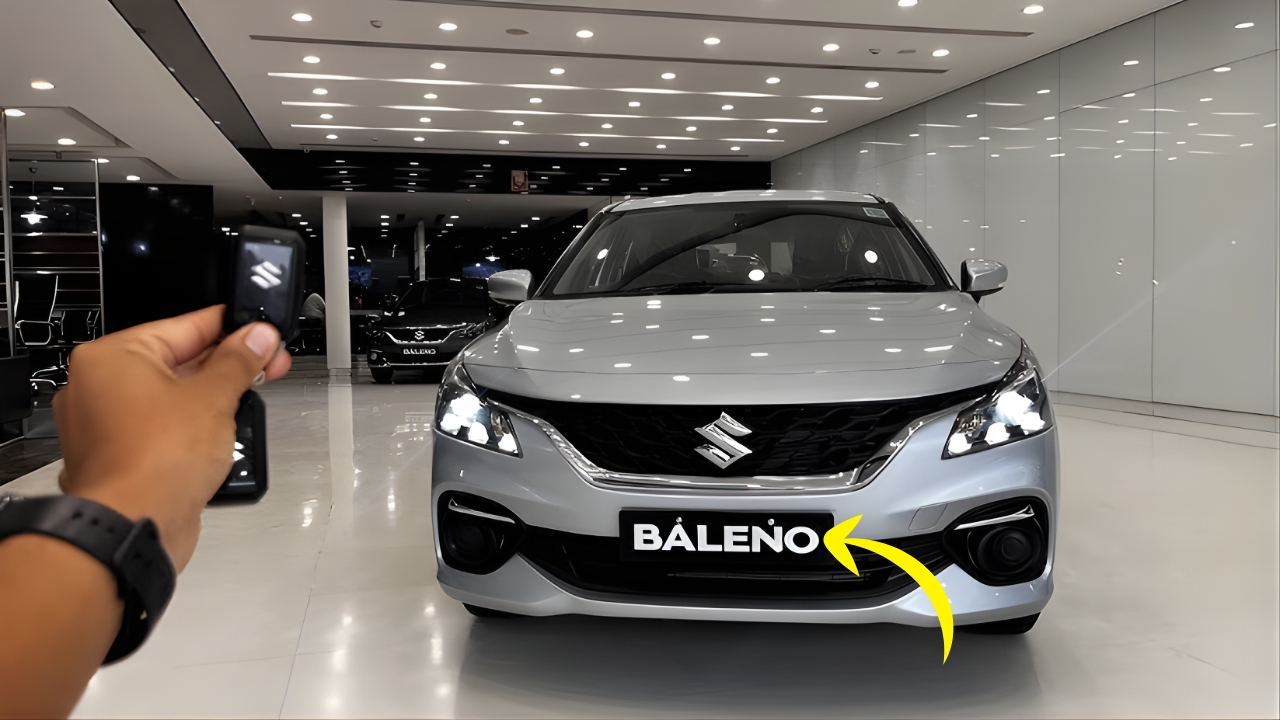
The 2026 Baleno wears its updates with quiet confidence. The front grille now sports a finer mesh pattern, flanked by sleeker LED projectors that give the car a more premium stare.
The bumper has been reshaped to improve airflow, and those new 16-inch diamond-cut alloys add a touch of sophistication without looking overly sporty.
Move to the side, and the signature floating roofline remains, a design cue that still looks modern even years after its introduction. The rear gets new LED combination lamps with a sharper light signature.
It’s not radical, but it doesn’t need to be. The Baleno’s design philosophy has always been about mass appeal, and this update nails that brief perfectly.
Inside: Where Practicality Meets Premium
Step inside, and the Baleno continues to punch above its weight class.
Also Read: Maruti Wagon R 2026 Indian families first choice with 25kmpl mileage, design is fabulous
The dashboard layout is clean and driver-focused, dominated by the 9-inch SmartPlay Pro+ touchscreen that now comes with wireless Android Auto and Apple CarPlay as standard.
The materials feel a notch better, with soft-touch inserts on the dash and door pads that reduce the plastic feel.
Space is where the Baleno truly shines. With 318 liters of boot space, it swallows weekend luggage with ease.
The rear seats offer ample knee room for two adults, and the flat floor means a middle passenger won’t feel too cramped.
Maruti has also added rear AC vents and USB-C ports, a small touch that makes long family trips significantly more comfortable.
Engine: Efficiency Is the Real Hero
Under the hood, the Baleno sticks to its trusted 1.2-liter K-Series Dual Jet, Dual VVT petrol engine.
It puts out 89 PS and 113 Nm of torque, figures that might sound modest on paper but feel perfectly adequate in the city. The engine is mated to either a 5-speed manual or a 5-speed AMT automatic.
Also Read: Yamaha RX 100 Legendary motorcycle coming soon in 2026, 100cc engine
The real story here is efficiency. The manual variant returns a staggering 22.94 kmpl (ARAI), while the AMT isn’t far behind at 22.29 kmpl.
In real-world city driving, you can easily expect 18-20 kmpl, which is a massive relief at today’s fuel prices. The engine is refined, quiet at idle, and the AMT shifts are smooth enough for stop-and-go traffic.
Ride and Handling: Built for Indian Roads
Maruti has tuned the suspension specifically for our broken tarmac and speed breakers. The Baleno soaks up bumps with a compliant ride that never feels floaty.
The steering is light, making it a breeze to park in tight spots, yet it offers enough feedback to feel confident on highways.
It’s not a car you’d take for spirited cornering, but that’s not what Baleno buyers want. They want a stress-free commute, and that’s exactly what they get.
The NVH levels have improved too, with better insulation reducing road and wind noise at higher speeds.
Safety and Tech: Finally Playing Catch-Up
Safety has often been a sore point for Maruti, but the Baleno is slowly closing that gap.
It comes standard with dual front airbags, ABS with EBD, rear parking sensors, and a rearview camera. Higher variants get six airbags, ESP, and hill hold assist.
Also Read: Hyundai Grand i10 affordable price hatchback for middle class people, looks is mind blowing
The tech suite is where Maruti is trying to impress. The Head-Up Display (HUD) projects speed and navigation cues right on the windshield, keeping your eyes on the road.
The connected car tech offers over 40 features, including vehicle tracking, remote start, and geofencing alerts via the Suzuki Connect app.
Maruti Baleno Pricing and Verdict: The Value King Reigns Supreme
The 2026 Maruti Baleno starts at ₹6.80 lakh (ex-showroom) for the base Sigma variant and goes up to ₹10.15 lakh for the top-spec Alpha CVT.
This pricing undercuts the Hyundai i20 and Tata Altroz while offering better mileage and lower maintenance costs.
Also Read This : Maruti Wagon R 2026 Indian families first choice with 25kmpl mileage, design is fabulous
The Baleno isn’t trying to be the most exciting hatchback on the block. It’s trying to be the smartest buy, and it succeeds brilliantly.
For anyone looking for a no-nonsense, fuel-sipping, spacious family hatch that holds its value like gold, the Baleno remains the default choice. It’s not just a car; it’s the safe bet that never disappoints.